EPC Ratings Explained: What Every UK Property Owner Needs to Know in 2026
An Energy Performance Certificate, commonly known as an EPC, has become an important part of the UK property market.
Whether you are buying a home, selling a property, renting it out, investing in property or simply trying to understand your home's energy efficiency, the EPC can provide useful information about the building and its potential energy performance.
But an EPC is more than a coloured A-to-G rating.
It can influence how a property is marketed, how buyers perceive it, the improvements they may consider after purchase and, for landlords, whether a property can legally be rented under the current Minimum Energy Efficiency Standards.
The rules are also evolving.
In 2026, the government is reforming the EPC system in England and Wales. The proposed new approach is intended to provide more useful information about a property's fabric, heating system, smart readiness and energy costs. The government announced in March 2026 that the launch of the reformed domestic EPC system had been moved to the second half of 2027 following engagement with industry.
At the same time, the government has confirmed a future 1 October 2030 compliance date for a higher energy-efficiency standard for privately rented homes in England and Wales, subject to the detailed implementation framework.
So if you own property in 2026, understanding EPCs is becoming increasingly important.
What Is an EPC?
An Energy Performance Certificate provides information about the energy performance of a building.
For domestic properties, the current EPC system gives the property an energy-efficiency rating from A to G:
A represents the most energy efficient properties.
G represents the least energy efficient.
The certificate also provides information about estimated energy use and recommendations for improving energy efficiency.
An EPC is generally valid for 10 years, unless a newer EPC is produced for the property.
The certificate is designed to help people understand the energy characteristics of a property before making important decisions.
For buyers, it can provide an indication of potential energy performance.
For tenants, it can provide information before renting.
For sellers and landlords, it forms part of the information required when marketing qualifying properties.
Why Does an EPC Matter?
Energy efficiency has become increasingly important in property decisions.
A property with a strong EPC rating may appeal to buyers who are concerned about energy costs, comfort and future improvements.
A property with a low rating may require more work.
For landlords, the issue is even more significant because Minimum Energy Efficiency Standards apply to relevant privately rented properties in England and Wales.
Since April 2020, landlords generally cannot continue to let properties covered by the regulations with an EPC rating below E unless a valid exemption applies.
That makes EPC compliance an important part of property management.
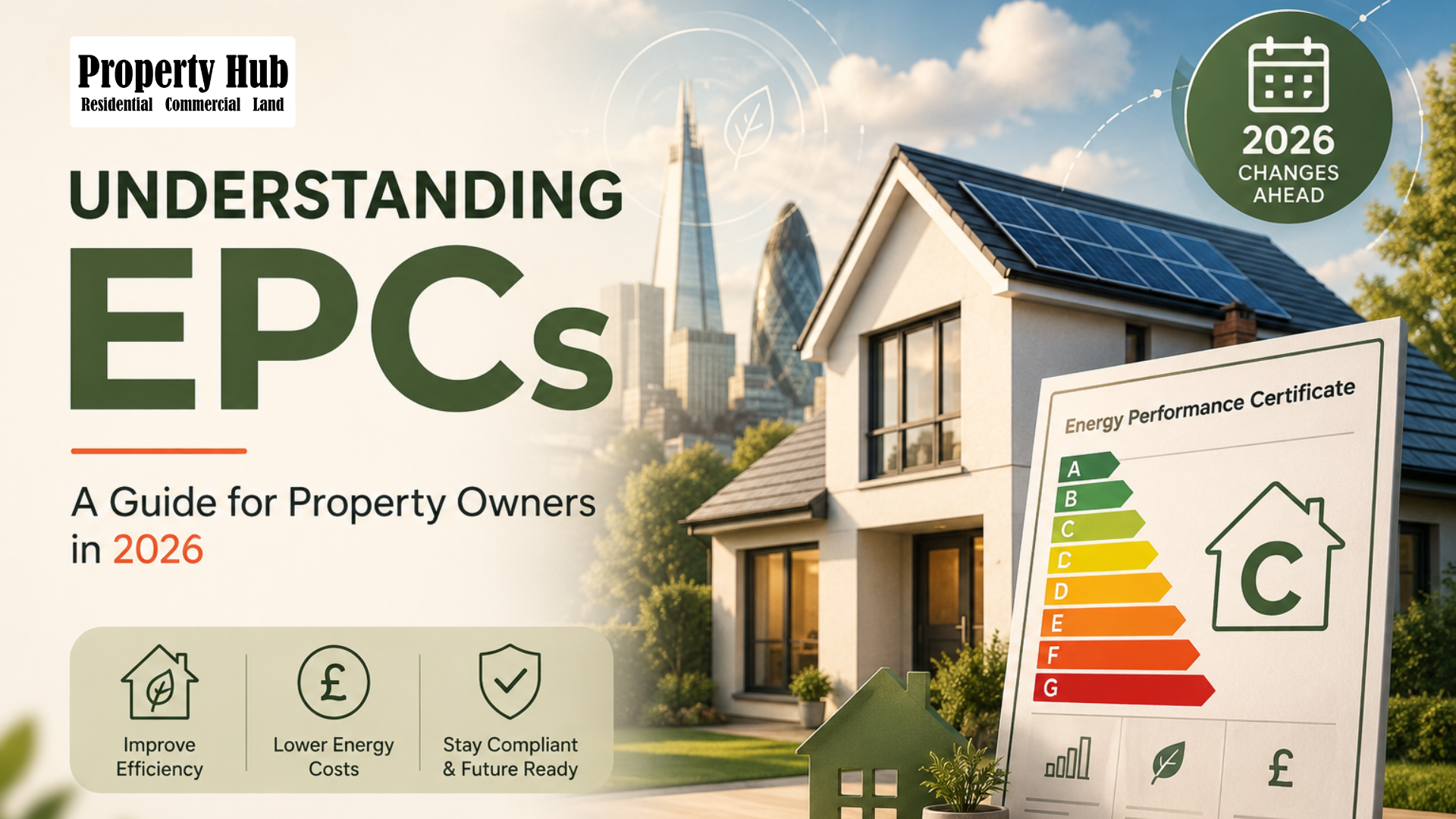
Understanding the EPC Rating Scale
The EPC rating runs from A to G.
A — Highly Efficient
An A-rated property generally has strong energy-efficiency characteristics.
It may benefit from features such as:
- High levels of insulation.
- Efficient heating.
- Modern glazing.
- Renewable-energy technologies.
- Effective controls.
- Efficient hot-water systems.
However, the precise features vary between properties.
B — Very Efficient
B-rated homes generally perform well and may have a combination of good insulation, efficient heating and modern building systems.
C — Reasonably Efficient
C is an increasingly important rating in the UK property market.
Many homeowners and landlords view C as a useful benchmark because government policy is moving towards higher energy-efficiency standards for privately rented homes.
D — Average
A D-rated property may still be perfectly comfortable, but there may be opportunities to improve energy efficiency.
E — Lower Efficiency
E is particularly important for landlords because it currently represents the minimum EPC rating generally required for relevant privately rented properties in England and Wales unless an exemption applies.
F and G — Poorer Energy Performance
Properties rated F or G may have significant opportunities for improvement.
For landlords, properties covered by MEES can face restrictions on letting unless the required steps have been taken or a valid exemption has been registered.
Does Every Property Need an EPC?
No.
There are exemptions and special circumstances.
However, an EPC is generally required when a qualifying property is:
- Constructed.
- Sold.
- Rented out.
The government states that sellers and landlords must have an EPC before marketing a property for sale or rent, subject to the applicable rules and exemptions.
There are specific exemptions for certain buildings and circumstances.
For example, some listed or officially protected buildings may qualify for exemption where meeting minimum energy-performance requirements would unacceptably alter their character or appearance.
If you believe your property may be exempt, it is important to establish the position properly rather than assuming an exemption applies.
How Long Is an EPC Valid?
A domestic EPC is generally valid for 10 years.
For example, if an EPC was produced in 2024 and no newer EPC has been produced, it can generally remain valid until 2034.
However, producing a new EPC can change the recorded rating.
This means property owners should consider the timing of a new assessment carefully, particularly where the existing certificate is still valid and the property is being sold or rented.
The government's guidance confirms that an EPC remains valid for 10 years or until a newer EPC is produced for the same building.
When Do You Need an EPC When Selling?
If you are selling a property that requires an EPC, you generally need to have one before marketing begins.
The government states that an EPC must be ordered before a property is marketed for sale and that the energy rating should be included in relevant commercial advertising.
This means an EPC should not be treated as something to organise at the very end of the sales process.
If you are preparing to sell, check whether the property already has a valid EPC.
If it does not, you may need to arrange a new assessment.
When Do Landlords Need an EPC?
Landlords letting properties covered by EPC requirements generally need an EPC and must comply with the applicable Minimum Energy Efficiency Standards.
For relevant private rented properties in England and Wales, the current minimum standard is generally EPC E, unless a valid exemption applies.
This means landlords should know:
- Their property's current EPC rating.
- When the EPC expires.
- What recommendations are included.
- Whether the property meets current requirements.
- Whether improvements are necessary.
- Whether an exemption may apply.
What Are MEES Regulations?
MEES stands for Minimum Energy Efficiency Standards.
The regulations establish minimum energy-efficiency requirements for certain privately rented properties.
For domestic private rented properties covered by the regulations, landlords generally cannot let a property with an EPC rating below E unless a valid exemption has been registered.
The government maintains an exemptions framework covering circumstances where properties cannot be brought up to the required standard for specified reasons.
This makes MEES an important consideration when buying, managing or investing in rental property.
What Happens If a Property Is Below EPC E?
A low EPC rating does not automatically mean a property cannot be sold.
Selling and letting are different situations.
A property can generally be sold even if its EPC rating is low, provided the applicable EPC requirements are met.
The situation can be different for landlords.
If a privately rented property falls within the MEES regulations and has an EPC rating below E, the landlord may need to undertake improvements or establish a valid exemption before continuing to let it.
Therefore, buyers should not confuse:
"Can I buy this property?"
with:
"Can I legally let this property?"
They are separate questions.
EPC and Property Value
An EPC does not automatically determine a property's market value.
Location, size, condition, land, demand, transport links and many other factors can have a much larger influence.
However, energy performance can still affect buyer perception.
Two otherwise similar properties may be viewed differently if one has:
- Better insulation.
- More efficient heating.
- Lower estimated energy costs.
- Modern windows.
- Solar panels.
- Better overall energy performance.
For some buyers, these features can make a property more attractive.
Can Improving an EPC Increase Property Value?
Potentially.
There is no guaranteed percentage increase simply because an EPC rating improves.
However, energy-efficiency improvements can make a property more attractive by improving comfort, reducing potential energy consumption and addressing concerns about future running costs.
The financial benefit depends on:
- Property type.
- Location.
- Improvement cost.
- Existing EPC rating.
- Buyer demand.
- Quality of the improvement.
- Energy prices.
- Local market conditions.
An expensive improvement that adds little buyer appeal may not make financial sense purely for resale.
Which Improvements Can Improve an EPC?
The recommendations on the EPC itself can provide a useful starting point.
Potential measures can include:
- Loft insulation.
- Cavity-wall insulation.
- Solid-wall insulation where appropriate.
- Improved glazing.
- Draught-proofing.
- Heating-system improvements.
- Heating controls.
- Hot-water improvements.
- Solar photovoltaic panels.
- Low-energy lighting.
- Renewable technologies.
The suitability of each measure depends on the individual property.
A Victorian terrace, modern apartment and detached new-build may require completely different approaches.
Insulation and EPC Ratings
Insulation can have a significant role in improving energy performance.
Heat can escape through:
- Roofs.
- Walls.
- Windows.
- Doors.
- Floors.
Improving insulation can help reduce heat loss.
However, insulation work should be properly assessed before installation.
Some older buildings require specialist approaches, particularly where moisture, ventilation and building fabric are important considerations.
Improving energy efficiency should not create new problems by ignoring the property's construction.
Windows and Glazing
Windows can influence the energy performance of a property.
Older single-glazed windows may provide less thermal performance than modern double or triple glazing.
However, replacement windows can be expensive.
If you are preparing a property for sale, consider the likely return before undertaking major work.
Improving the property's overall presentation, condition and energy performance may be beneficial, but not every possible EPC recommendation will make financial sense before a sale.
Heating Systems
Heating is another major factor in energy performance.
An EPC assessment considers the property's heating system and related characteristics.
Potential improvements could include:
- More efficient boilers.
- Better heating controls.
- Zoned heating.
- Smart thermostats.
- Heat pumps where suitable.
- Improved hot-water systems.
The correct solution depends on the building.
A heat pump, for example, should not be selected simply because it is a modern technology.
The property's insulation, heat-loss characteristics, heating distribution and suitability all need to be considered.
Solar Panels and EPC Ratings
Solar photovoltaic panels can contribute to improved energy performance.
They can also generate electricity for the property and potentially reduce reliance on grid electricity.
But the financial case varies.
Consider:
- Installation cost.
- Roof orientation.
- Shading.
- Roof condition.
- Expected electricity generation.
- Occupancy patterns.
- Battery storage.
- Maintenance.
Again, the best decision depends on the individual property.
EPCs and Older Properties
Older homes can present particular challenges.
Period properties may have:
- Solid walls.
- Original windows.
- Older heating systems.
- Unusual construction.
- Limited insulation.
- Listed status.
- Conservation-area considerations.
Improving energy efficiency in an older building requires care.
A modern solution may not always be appropriate.
Homeowners should consider the building's structure and seek suitable professional advice before carrying out major energy-efficiency work.
EPCs and New-Build Properties
Newer properties often benefit from modern construction standards and energy-efficiency features.
They may include:
- Better insulation.
- Modern glazing.
- Efficient heating.
- Mechanical ventilation.
- Smart controls.
- Renewable-energy technologies.
However, buyers should still review the actual EPC rather than assuming that a new property automatically has the best possible rating.
What Is Changing About EPCs in 2026?
This is where the subject becomes particularly important.
The government is reforming the Energy Performance of Buildings regime in England and Wales.
The current EPC system primarily uses an energy-efficiency rating based on modelled energy costs.
The proposed new system is designed to provide a broader picture of building performance.
The government has proposed new headline metrics covering areas including:
- Fabric Performance
- Heating System
- Smart Readiness
- Energy Cost
The existing headline metric is also being reconsidered as part of the reform.
This could change how homeowners, buyers, landlords and lenders interpret EPC information in the future.
When Will the New EPC System Start?
This is an important 2026 update.
The government originally planned to introduce reformed domestic EPCs earlier, but in March 2026 it announced that the launch had been moved to the second half of 2027 following engagement with industry.
Therefore, property owners should be careful about online articles claiming that the new EPC system has already replaced the current system.
It has not.
The existing EPC framework continues to apply while the reforms are developed and implemented.
The Future EPC May Tell Buyers More
The proposed reforms are intended to make EPCs more useful.
Instead of providing a single headline number that can sometimes be difficult to interpret, the new approach is intended to provide more detailed information about different aspects of a property's energy performance.
That could help buyers answer questions such as:
How good is the building fabric?
How efficient is the heating system?
How smart and controllable is the property?
What are the likely energy costs?
This could make EPC information more meaningful during property transactions.
EPCs and Landlords: Looking Towards 2030
Landlords should pay particular attention to the government's future plans.
The government has confirmed a future compliance date of 1 October 2030 for the proposed higher energy-efficiency standard for privately rented homes in England and Wales.
The policy includes a dual-metric approach, a fabric-performance requirement and additional requirements involving heating-system or smart-readiness standards. The government has also confirmed a £10,000 cost cap and longer exemption validity under the future framework.
However, landlords should understand the difference between:
current legal requirements
and
future standards.
The current MEES framework generally requires relevant privately rented properties to meet EPC E unless a valid exemption applies.
The future framework is intended to raise the standard significantly.
Should Landlords Start Improving Properties Now?
For many landlords, early planning could make sense.
If a property currently has an EPC rating of F or G, the issue already requires attention where MEES applies.
If a property has an EPC rating of D or E, landlords may want to understand what future improvements could be required.
Planning ahead can help landlords:
- Spread improvement costs.
- Coordinate works with tenancy changes.
- Reduce disruption.
- Compare different improvement options.
- Avoid last-minute decisions.
- Protect the property's long-term rental potential.
However, landlords should avoid spending large amounts based solely on assumptions about future rules.
The final implementation details matter.
EPC Exemptions
Not every property that fails to meet the minimum standard is automatically unlawful to let.
The government has an exemptions system for qualifying properties.
Current exemption categories include circumstances involving:
- High improvement costs.
- Seven-year payback considerations.
- All relevant improvements already being made.
- Wall insulation considerations.
- Lack of required consent.
- Potential property devaluation.
The evidence requirements for exemptions were updated in May 2026.
An exemption must be properly established and registered where required.
Simply believing that a property is exempt is not enough.
What Buyers Should Check
If you are buying a property, don't look only at the EPC rating.
Review:
- The EPC score.
- The EPC expiry date.
- The recommendations.
- The property's heating system.
- Insulation.
- Windows.
- Potential improvement costs.
- Any unusual construction.
- Future energy-efficiency considerations.
If you are buying specifically as an investment, consider the rental implications as well.
What Sellers Should Do Before Marketing
If you're planning to sell, consider the EPC as part of your preparation.
Check whether the existing certificate is valid.
If you need a new EPC, arrange it through an accredited assessor.
Then review the recommendations.
You don't necessarily need to complete every recommendation before selling.
Instead, consider which improvements make commercial sense based on:
- Cost.
- Buyer appeal.
- Property condition.
- Expected return.
- Marketing strategy.
An estate agent can also help you understand how buyers in your local market respond to energy-efficiency features.
What Landlords Should Do Now
Landlords should maintain an accurate record of their property's energy position.
A useful checklist is:
1. Check the EPC rating.
2. Check the EPC expiry date.
3. Review the recommendations.
4. Confirm whether MEES applies.
5. Check whether any exemption applies.
6. Keep evidence of improvements.
7. Consider future requirements.
8. Budget for potential upgrades.
9. Review the property's rental strategy.
10. Obtain professional advice where necessary.
Energy efficiency should be treated as part of long-term property management rather than a last-minute compliance exercise.
EPCs and Tenants
For tenants, an EPC can provide useful information before entering into a tenancy.
It can indicate the property's energy-efficiency rating and provide recommendations for improvements.
A tenant comparing two otherwise similar properties may consider energy performance alongside:
- Rent.
- Location.
- Transport.
- Property condition.
- Size.
- Amenities.
Energy efficiency therefore has the potential to become increasingly important in rental decisions.
EPCs and Buyers
For buyers, an EPC should not be treated as a replacement for a survey.
An EPC is designed to assess energy performance.
A property survey examines the physical condition of the building.
They answer different questions.
An EPC may tell you that a property has certain insulation characteristics.
A survey can identify issues such as structural defects, damp, roof problems or other building concerns.
A sensible buyer should understand the purpose of both.
EPC vs Property Survey
Think of them this way:
EPC: How energy efficient is the property?
Survey: What condition is the property in?
You may need both.
A property can have an excellent EPC and still require substantial structural repairs.
Likewise, an older property with a low EPC could be structurally sound.
Never assume that one document replaces the other.
Can an EPC Be Wrong?
An EPC is based on information collected and assumptions used within the assessment methodology.
The quality of the information and assessment therefore matters.
If you believe an EPC contains incorrect information, you should raise the issue through the appropriate assessor or accreditation process.
The government is also reforming the EPC system partly to improve data quality and the usefulness of building-performance information.
Does EPC Rating Affect Mortgage Decisions?
The relationship between EPCs and mortgages is evolving.
Some lenders have developed products and criteria that consider energy efficiency.
As the financial sector increasingly focuses on environmental performance and property risk, energy information may become more relevant to lending decisions.
However, there is no universal rule that a particular EPC rating automatically guarantees or prevents mortgage approval.
Mortgage decisions depend on the lender's criteria and the borrower's overall circumstances.
Does an EPC Guarantee Low Energy Bills?
No.
This is an important misconception.
An EPC provides modelled information based on standard assumptions.
Actual energy use depends on how the property is occupied.
Two households living in identical homes can have very different energy bills.
Factors include:
- Number of occupants.
- Heating habits.
- Temperature preferences.
- Working from home.
- Appliance use.
- Hot-water use.
- Energy tariffs.
Therefore, the EPC should be treated as an indicator—not a guarantee of actual bills.
Should You Improve Your EPC Before Selling?
There is no universal answer.
Some improvements may provide an attractive return.
Others may not.
If you're selling a property, prioritise improvements that create broader buyer appeal.
For example, addressing obvious defects, improving presentation, repairing windows or upgrading poor heating may potentially improve both the property's usability and its marketability.
But expensive specialist improvements should be considered carefully.
The right strategy depends on the property's location, price range, condition and target buyer.
The Bigger Picture
Energy efficiency is becoming a larger part of the UK's property conversation.
It affects:
- Homeowners.
- Buyers.
- Sellers.
- Landlords.
- Tenants.
- Investors.
- Developers.
- Mortgage lenders.
- Property managers.
The importance of EPCs is likely to increase as the government reforms the system and moves towards higher energy-efficiency standards for privately rented properties.
For property owners, this creates an opportunity.
Instead of waiting for regulation to force action, owners can think strategically about energy performance as part of the property's long-term value.
Final Thoughts
An EPC may look like a simple A-to-G rating, but its importance goes much further.
For sellers, it is part of preparing and marketing a property.
For buyers, it provides information about energy performance and potential improvements.
For landlords, it can be a critical compliance issue.
For investors, it can influence the long-term cost and attractiveness of a property.
And in 2026, the subject is becoming even more important because the UK EPC system is changing.
The government is developing a new approach designed to provide more detailed information about building fabric, heating, smart readiness and energy costs, with the launch of reformed domestic EPCs now planned for the second half of 2027.
At the same time, landlords need to prepare for the future direction of energy-efficiency regulation, including the planned 2030 standard for privately rented homes in England and Wales.
The key message for property owners is simple:
Don't treat your EPC as just another piece of paperwork.
Understand what it says.
Understand what it doesn't say.
Understand the improvements available.
And, if you are a landlord, understand both the rules that apply today and the direction of future regulation.
A more energy-efficient property can potentially provide better comfort, stronger market appeal and lower running costs—but every improvement should be assessed according to the individual property and its financial circumstances.
How Property Hub Ltd Can Help
At Property Hub Ltd, we understand that property decisions involve much more than simply buying or selling a building.
Energy efficiency, property condition, market value, rental demand and changing regulations can all influence a property's future.
Whether you are preparing to sell, considering a rental property or managing an existing portfolio, understanding your property's current position is an important first step.
Our property services can help homeowners and landlords navigate the wider property market, from valuations and sales to lettings and property management.
If you are considering selling your property, understanding its current market value can help you make better decisions about which improvements are worth considering before going to market.
And if you are a landlord, reviewing your property's EPC and energy-efficiency position early can help you plan rather than react.
Your EPC is only one part of your property—but understanding it can help you make a smarter decision about the whole property.
Property Hub Ltd — Your Property. Our Priority.
This article provides general information about EPCs and property regulations in England and Wales. Energy-efficiency and property legislation can change, and individual properties may be subject to different requirements or exemptions. Landlords, buyers and property owners should obtain appropriate professional or legal advice for their specific circumstances.